Unity and Variety
Every system lives between sameness and difference. The art is choosing where.
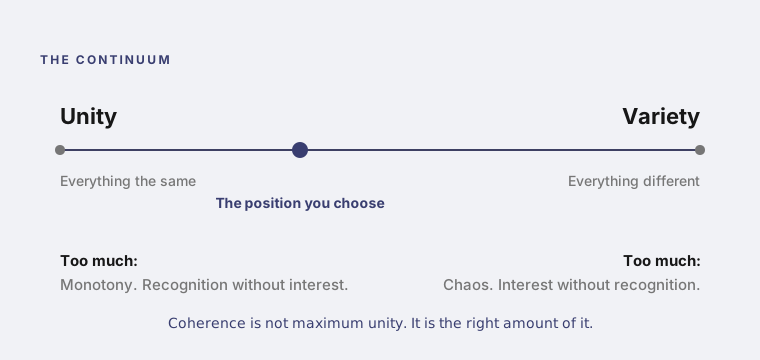
Too much unity becomes monotony. Too much variety becomes chaos. Every system that works has chosen its place between them.
This is the most universal design decision there is, and it is almost always made by accident. Unity is sameness: repetition, consistency, everything belonging. Variety is difference: contrast, surprise, everything distinct. Every communication system, from a typeface to an organization, sits somewhere on the line between them.
The principle
Coherence is not maximum unity. It is the right amount of unity for the meaning intended. A system that is all unity is monotonous. A system that is all variety is chaos. The position a system chooses on this line is not a detail of its style. It is its personality.
Why it matters
Most organizations drift toward one end without choosing. They push toward unity because consistency feels safe, until the brand is forgettable. Or they push toward variety because newness feels alive, until nothing holds together. Naming the line lets you choose the position on purpose, and defend it when the pressure comes to abandon it.
Mechanism
Unity and variety are bought with each other. Unity creates recognition, trust and calm, by repetition. Variety creates attention, interest and emotion, by difference. You cannot maximize both. Every element you add either reinforces the unity or spends some of it on variety. The discipline is to spend variety deliberately, where it earns attention, and to hold unity everywhere else.
This is why unity is the one part of the line you cannot skip. A field too hard to take in reads as effort, and attention treats unrewarded effort as a reason to leave. The two poles are not symmetrical. At one end sits boredom, at the other chaos. Chaos gets rejected on sight, while boredom at least still gets read. Some unity is the floor of comprehension, not a matter of taste. Variety is the choice. Unity is the cost of being understood at all.
Applications
Organizations choose how much every part looks and acts alike. Brands choose how much they repeat. Customer experience chooses how consistent each touchpoint feels. Product design, teams, leadership, interfaces, typography, visual design, writing, presentations, architecture and movement building are all the same decision in different materials: how much sameness, how much difference, and where exactly between them.
Examples
A uniform is near the unity end, and reads as institution and trust. A carnival is near the variety end, and reads as energy and freedom. A disciplined brand holds high unity and lets one deliberate element carry the variety. The brands that feel cheap are usually the ones spending variety everywhere, on every page, until none of it lands.
Questions for leaders
Are we monotonous or chaotic right now, honestly. Did we choose this position, or inherit it through a thousand small decisions. What does the meaning we want actually require: more sameness, or more difference. And where, specifically, are we allowed to spend variety.
Practical implications
Name your target position on the line. Then treat every element as a vote for unity or a spend of variety. Coherence is not achieved by making everything the same. It is achieved by making everything serve one chosen ratio of same to different.