Pragmatics
The same message, two contexts, two meanings.
Identical messages produce different outcomes depending on who receives them, when, where and how.
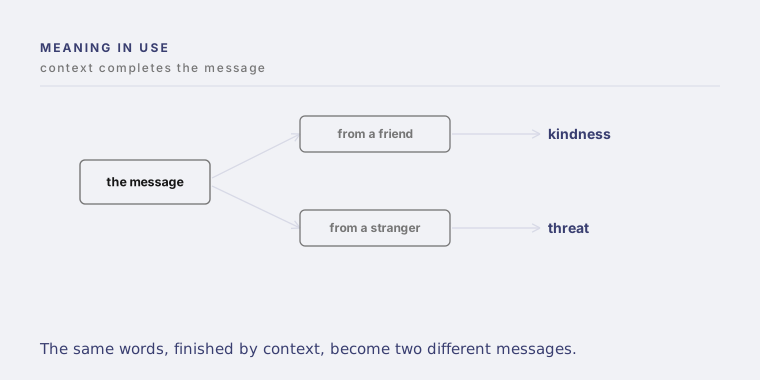
The same three words are a kindness from a friend and a threat from a stranger. The same announcement reassures one week and alarms the next. Pragmatics is meaning in use: the part of meaning that comes not from the message but from the situation it lands in.
The principle
A message is completed by its context. The audience, the culture, the timing, the medium and the expectations already in the room are not noise around the message. They are part of it. You can write a perfect sentence and still be misunderstood, because the meaning was finished by conditions you did not design.
Mechanism
The receiver interprets through their own situation. Relationship sets whether a directive reads as trust or control. Timing sets whether news reads as candor or panic. The messenger sets whether a claim reads as credible or hollow. The medium sets the register before a word is read. Context does not surround the message. It assembles it.
Applications
Leadership: the same instruction lands differently depending on who gives it and what they have done before. Branding: the same claim reads as confidence or as hype depending on the track record behind it. Customer experience: the same message changes meaning with timing and channel. Writing: the same line reads as wisdom or cliche depending on what earned it.
Examples
A new policy announced the day after layoffs means something the same policy would not mean a quarter later. A promise from a brand with ten years of proof is a different message than the identical promise from a brand with none. The words did not change. The context did all the work.
Questions for leaders
What context is our message actually landing in. What are the timing and the messenger adding or subtracting before anyone reads the content. Are we refining the message when we should be changing the conditions of reception.
Practical implications
Design the context, not just the message. Often the highest-leverage move is not better words. It is a better moment, a better messenger or a better medium.