The Construction of Meaning
Meaning is not inside the object. It is assembled in the mind.
Meaning is not contained in things. It is constructed by the person receiving them.
We talk as if meaning is inside objects, waiting to be delivered. It is not. A logo, a sentence, a product, a policy: none of them contain their meaning. The receiver builds it, out of the signal and everything they bring to it. This single shift changes what communication even is.
The principle
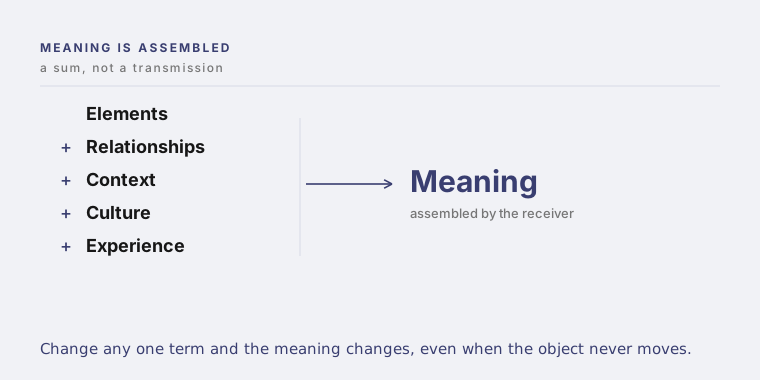
Meaning is constructed, not transmitted. It is assembled from five things at once:
Elements + Relationships + Context + Culture + Experience = Meaning
Change any term and the meaning changes, even if the object never moves. The same logo means something different to someone who has had a bad experience with the brand, because they are bringing a different term to the equation.
Mechanism
The receiver assembles meaning from the signal plus their own mental models, conventions and memory. Ambiguity is the gap between the meaning you intended and the meaning they construct. Symbolism, convention and interpretation all live in that gap. You do not get to fill it. You only get to give people better or worse materials to build with.
A stop sign shows how little the object carries on its own. Strip the word off it and shrink it, and a viewer who grew up with it still reads stop, while a viewer who never encountered it reads only a red shape. Same elements, same relationships. Different culture and experience, different meaning. The object never changed. The person did.
Why it matters
If meaning is constructed, then communication is the management of construction, not the delivery of content. You are not sending meaning down a wire. You are handing people parts and hoping they build what you intended. This is why the same message can be clarity to one audience and offense to another, with no change to the words.
Applications
Every medium. A brand means what its audiences construct, not what its designers intended. A strategy means what the organization builds from it, not what the deck said. A product means what its use teaches, not what its features claim.
Examples
This is also why recognition works. When a reader recognizes a truth, they construct it themselves, and people defend what they built far longer than what they were handed. The strongest communication does not assert meaning. It gives people exactly the materials to assemble it on their own.
Questions for leaders
What are people actually constructing from what we send. Where does their construction diverge from our intent, and why. What materials are we missing, or providing, that change what they build.
Practical implications
Test the constructed meaning, not the intended one. Ask what people built, not whether your message was clear to you. The only meaning that exists is the one assembled on the other side.