The Protective Function
Every mature organization funds a function to protect its health. This is the one that protects coherence.
Every mature organization funds a function to protect its health. This is the one that protects coherence.
Ask what creative leadership is for and the usual answers point at output: attractive work, sharper advertising, a consistent logo. Those are products of the role, not its purpose. The purpose comes into focus when you set the role beside the other functions a growing organization eventually creates. Finance protects financial health. Operations protects operational health. Human resources protects organizational health. Each exists because a particular kind of health erodes when no one is accountable for it.
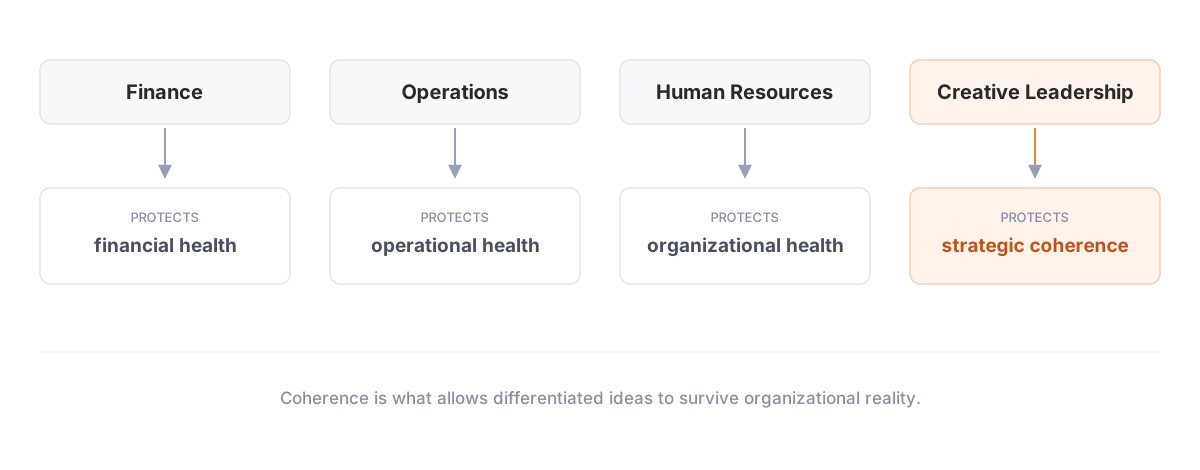
Creative leadership is the same kind of function. What it protects is strategic coherence: the quiet agreement among a company’s signals that they are all saying the same thing. Coherence is not a style. It is the condition in which a differentiated idea stays recognizable as it passes through many hands, each with a reasonable reason to adjust it.
That is why the role is organizational rather than aesthetic. The threats to coherence are not bad taste; they are ordinary organizational forces. Ideas decay one reasonable edit at a time. Organizations drift one sensible compromise at a time. Left unattended, both quietly remove the characteristics that made an idea worth choosing, and no single decision is ever the one to blame.
Why it matters
Differentiation is the outcome every leader wants, but it is not the thing you manage. Coherence is. An organization becomes distinctive because every signal keeps reinforcing the same governing idea over time, and it stops being distinctive the moment that reinforcement lapses. Someone has to be accountable for that reinforcement the way someone is accountable for cash flow or uptime. Name the function and a differentiated idea survives contact with the organization. Leave it unnamed and the organization drifts toward comfortable irrelevance while everyone is being entirely reasonable.
In practice this becomes a creative operating system: strategy, brand and design treated as one discipline, so coherence is produced on purpose rather than hoped for. Victory is where that system becomes organizational behavior.