Friction
Most resistance is structural, not personal.
Most resistance is structural, not personal.
When an organization moves slowly, the instinct is to find who is resisting. Usually no one is. The people are willing and the system is not. What looks like reluctance is friction: the accumulated drag of approvals, handoffs, mismatched incentives and processes that make the right thing harder than the easy thing.
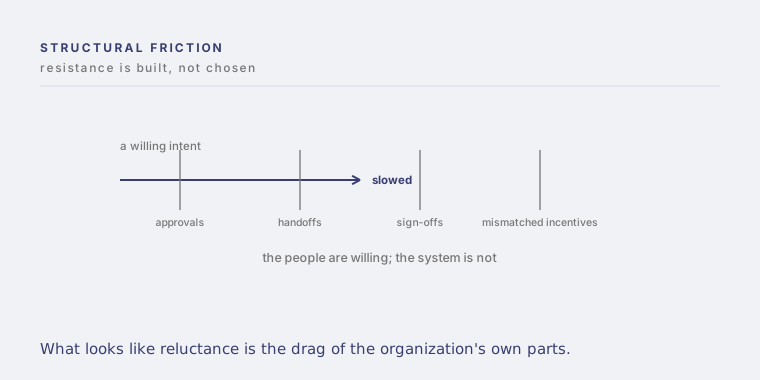
Friction is a force because it is built, not chosen. Every policy added for a good reason, every sign-off introduced after a past mistake, every system that solved one problem and quietly created two, stays in place long after its moment. None of it was meant to slow the company down. Together it does, and because it is structural it is invisible to the people inside it, who experience it as simply how things work here.
Leaders underestimate friction because they read slowness as a motivation problem and answer with pressure. Pressure on a system full of friction produces heat rather than speed, and it burns out the people willing enough to keep pushing against it.
Why it matters
An organization can lose its best people to friction and never learn why they left. Talent does not leave the work. It leaves the drag around the work. A competitor with less friction will out-execute a smarter company that has more of it, because execution is precisely what friction taxes. The leader's task is to treat friction as a system to be designed, not a willpower to be summoned. Remove a step before adding an incentive. Ask what makes the right thing hard before asking why no one is doing it. People move when the path is clear, and clearing the path is the work.