Compounding
Small decisions rarely stay small.
Small decisions rarely stay small.
A single decision rarely changes much. It is the same decision, made the same way a thousand times, that determines what an organization becomes. Compounding is the quiet force that turns small and repeated into large and permanent, in either direction.
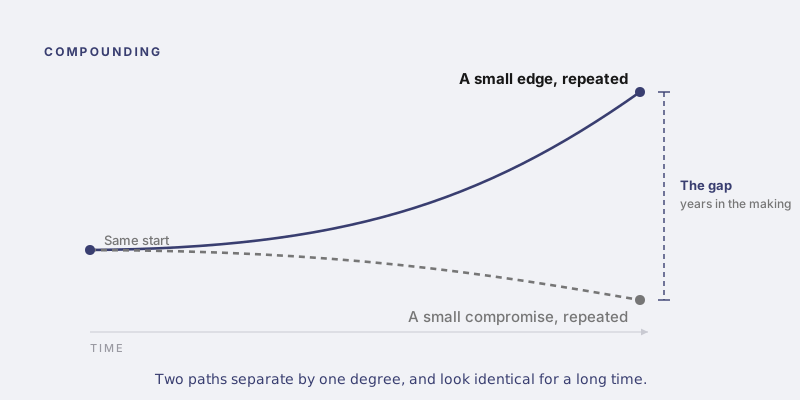
Compounding is a force because organizations run on repetition. A standard held a little higher each time, a measure of trust earned and kept, a small advantage reinvested instead of spent: none of it impresses on any given day, and all of it accumulates into a lead competitors cannot account for. The same machinery runs in reverse. A small compromise repeated, a standard quietly lowered, a little trust spent and never replaced, and the decline is just as real and just as invisible until it is large.
Leaders underestimate compounding because the early difference is too small to see. Two paths that separate by a single degree look identical for a long time, and then do not. By the time the gap is obvious, years of compounding stand behind it and cannot be closed in a quarter.
Why it matters
Most durable advantage is not won in a decisive move. It is accumulated below the threshold of attention, by an organization that kept choosing the same direction while its competitors chased events. The same is true of decline, which is why it always seems to arrive suddenly and never does. The leader's task is to identify the few things worth doing the same way every time, then protect that consistency against the constant temptation to chase what is new. Compounding rewards the patient and punishes the inconsistent. The work is to choose the direction once, and hold it long enough for the math to matter.