Idea Decay
An idea is rarely killed. It is softened until it can no longer do its job.
An idea is rarely killed. It is softened until it can no longer do its job.
A sharp idea enters the organization and a duller one comes out the far side. No one killed it. Each person who touched it made a small, reasonable adjustment. A hedge here, an accommodation there. By the time it ships it is safe, agreeable and unable to do the thing it was created to do.
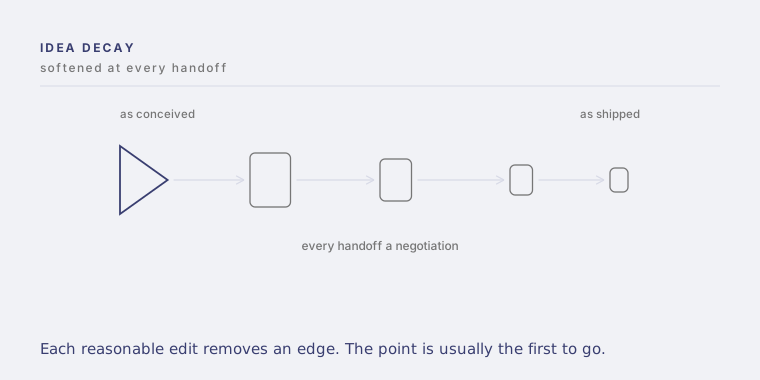
Idea decay happens because every handoff is a negotiation. The idea passes through people who were not there when it was conceived, each protecting a concern of their own, each removing the part that made someone uncomfortable. The uncomfortable part is usually the point. What survives is the part everyone could agree to, which is rarely the part that mattered.
Leaders underestimate decay because no single edit looks harmful. The damage is cumulative and unattributable, spread across so many reasonable revisions that no one feels responsible for the lifeless thing at the end. The mechanism is the same one that produces drift: a direction set by many small steps, none worth resisting on its own.
Why it matters
An organization that cannot move an idea through itself without dissolving it will only ever execute compromises. The boldest concepts decay the most, because they carry the most edges to sand off, so the system quietly selects for the forgettable and calls it consensus. Someone has to own the integrity of an idea from conception to delivery, with the standing to protect its sharp edge against a hundred reasonable softenings. The work is not to prevent change. It is to know which part must not change, and to defend that part when everyone has a small, sensible reason to remove it.