Organizational Memory
Organizations remember what they repeatedly do, not what they say.
Organizations remember what they repeatedly do, not what they say.
Every organization carries a memory it never wrote down. Not the documents, the assumptions: the things everyone knows without being told, the options that are never raised, the scars from decisions no one present can quite explain. This memory shapes what gets decided long after anyone remembers why.
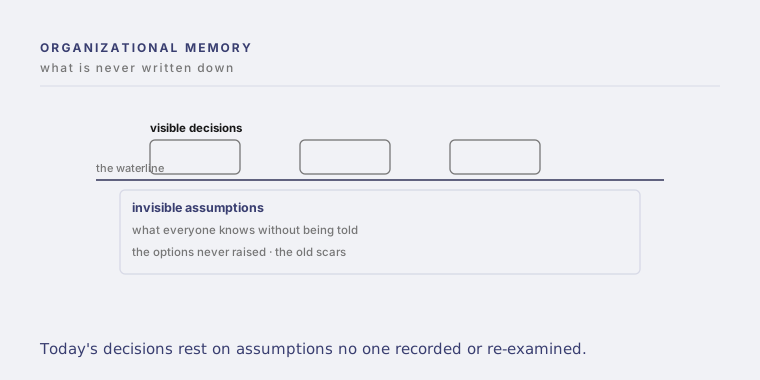
Organizational memory forms because repeated action teaches faster than stated intention. A company learns from what it actually did and what happened next, then encodes the lesson as instinct. Some of that instinct is hard-won wisdom. Some of it is an old failure that calcified into a rule no longer connected to its cause. Both feel like common sense, which is exactly why neither gets examined.
Leaders underestimate memory because it is invisible and behaves like a fact. "We tried that and it does not work here" ends conversations that should be reopened, on the authority of a context that has since disappeared.
Why it matters
An organization run by its unexamined memory is governed by its past, usually by the most cautious version of it. Yesterday's failure becomes today's boundary, and the boundary outlives the reason by years. Whole strategies go unconsidered, not because they were weighed and rejected, but because the memory ruled them out before anyone could speak. Leaders steward memory by deciding what the organization should keep remembering and what it should be free to forget. Hold the lessons that are still true. Retire the ones that are only a scar. The work is to make the assumptions visible, because an assumption you can see is one you can finally choose.