Recognition
People cannot respond to what they do not recognize.
People cannot respond to what they do not recognize.
An idea can be correct, well argued and completely invisible. Before anyone evaluates it, they have to recognize it, to fit it against something they already understand. What does not match a familiar pattern is not rejected. It is not seen at all.
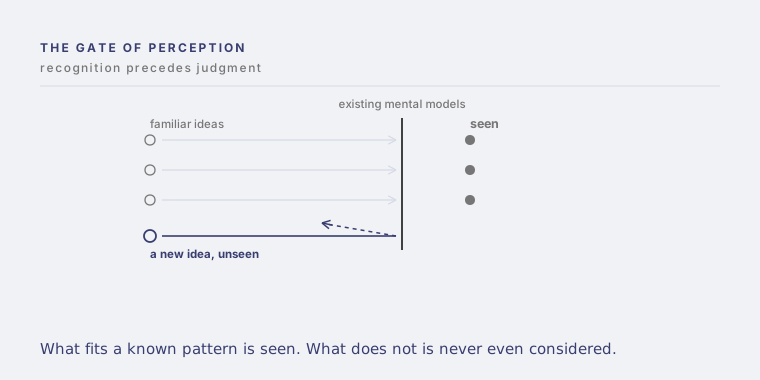
Recognition is a force because perception runs on existing models, not on evidence. People notice what confirms what they already hold and slide past what does not. Inside an organization this gives a genuinely new idea a disadvantage that has nothing to do with its merit: there is no slot waiting for it. The more original the idea, the less recognizable it is, and the more easily it disappears without a hearing.
Leaders underestimate recognition because they assume a good idea will be judged on its quality. It will not be judged at all until it is recognized, and recognition runs on familiarity, framing and the patterns already in the room.
Why it matters
Organizations do not merely reject the unfamiliar. They fail to perceive it, which is worse, because there is no debate to lose and no record of the miss. The best opportunities often look like nothing, since looking like nothing is exactly what new things do before the pattern exists to hold them. The leader's task is to make a new idea recognizable before asking anyone to act on it. Connect the unfamiliar to something already trusted, and the idea becomes visible enough to be considered on its merits. Recognition is not manipulation. It is the price of being understood at all, and it is paid in framing.