Multiplication
A system amplifies whatever you put into it, including the flaws.
A system amplifies whatever you put into it, including the flaws.
Organizations reach for scale as though it were only an opportunity. Scale is an amplifier. Whatever an organization does well, a good system makes larger. Whatever it does poorly, the same system makes larger too. Multiplication does not take sides. It enlarges what is already there.
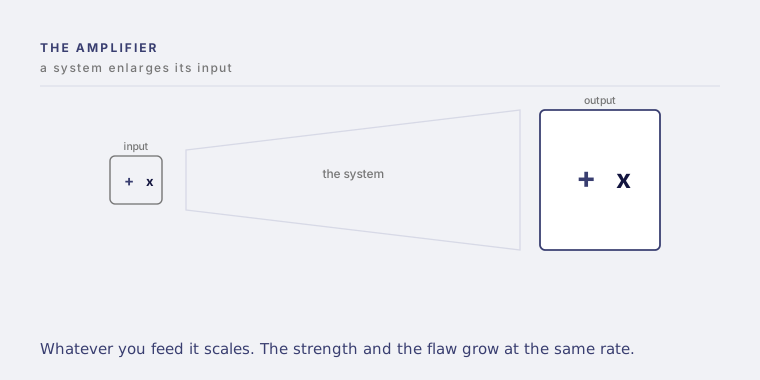
Multiplication is a force because systems do not judge what they carry. A process that turns one good decision into a thousand will turn one bad assumption into a thousand just as faithfully. This is why scaling a broken thing does not fix it. It mass-produces it. The better the machine, the more efficiently it ships whatever it was fed, the virtue and the flaw at the same rate.
Leaders underestimate multiplication because they install systems to capture the upside and forget the same leverage runs in reverse. A culture problem at fifty people becomes a crisis at five hundred, not because anything got worse, but because it got multiplied.
Why it matters
The instinct under pressure is to grow faster. But adding scale to something not yet worth multiplying only buys a larger version of the original problem, produced at volume and harder to unwind. Strength and weakness scale together, and the weakness usually scales more quietly, because no one is watching the thing that already worked. Leaders steward multiplication by deciding what is worth amplifying before they amplify it. Get the thing right while it is still small and cheap to change, then let the system enlarge it. The work is not to scale faster. It is to be sure that what you are about to multiply has earned the right to be everywhere.