Semantics
How symbols come to mean anything at all.
Nothing means anything by itself. Meaning is assigned, learned and changeable.
A color does not mean trust. A word does not mean what it says. A gesture does not mean respect. Each of these meanings was assigned, learned inside a culture, and can be lost. Semantics is the study of that relationship: how a symbol comes to stand for something.
The principle
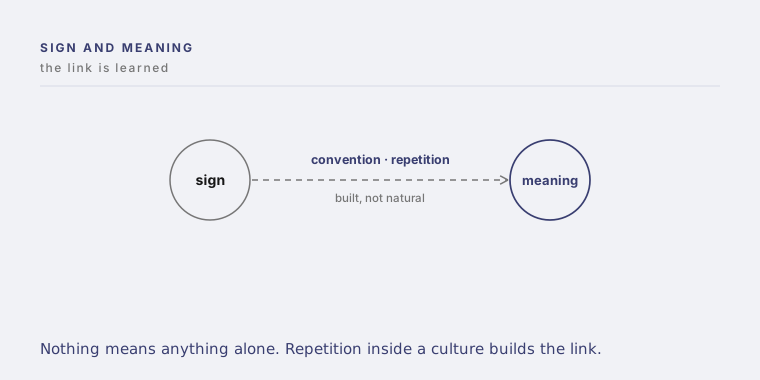
The link between a symbol and its meaning is built by convention, not by nature. This is the most important and most overlooked fact in communication, because it means meaning can be designed, and it means meaning can drift away from you without anyone deciding to take it.
Mechanism
Symbols acquire meaning through repeated association inside a culture. Pair a signal with an experience often enough and the signal starts to carry the experience on its own. This is exactly how a brand is built: not by announcing what it means, but by repeatedly pairing a mark, a voice and a color with a felt experience until the mark alone produces the feeling.
Applications
Visual semantics, in color and form. Verbal semantics, in words and names. Behavioral semantics, in what an action signals. Architectural semantics, in what a space says. Product semantics, in what a feature implies. Organizational semantics, in what a title, a process or a meeting has come to mean inside a company.
Examples
Red carries this plainly, and without a word attached. To one culture it is danger and stop. To another it is luck and celebration. To a third it is the color reserved for writing the names of the dead. Nothing in the wavelength decided that. Repetition inside each culture did, which is why the same red reassures one audience and unsettles another.
A wordmark means nothing on the first day and everything after a decade of consistent experience behind it. A leadership title means whatever the organization has repeatedly shown it means, which is often the opposite of the org chart. Meaning is a deposit account. It fills slowly, by repetition, and it can be overdrawn.
Questions for leaders
What does this signal mean to the people receiving it, not to us. What meaning have our repeated actions actually built, regardless of intent. Where has the meaning of a symbol drifted while we kept using it as if it had not.
Practical implications
You cannot declare meaning. You can only build it by repetition and protect it by coherence. Audit what your signals have come to mean before you add new ones.