Category Gravity
Every category pulls the companies inside it toward looking like the category.
Every category pulls the companies inside it toward looking like the category.
Spend long enough in any category and you begin to resemble it. The same page layouts, the same language, the same promises, the same pricing logic. No one decided to converge. The category exerted a pull, and one reasonable benchmarking decision at a time, everyone drifted toward the middle.
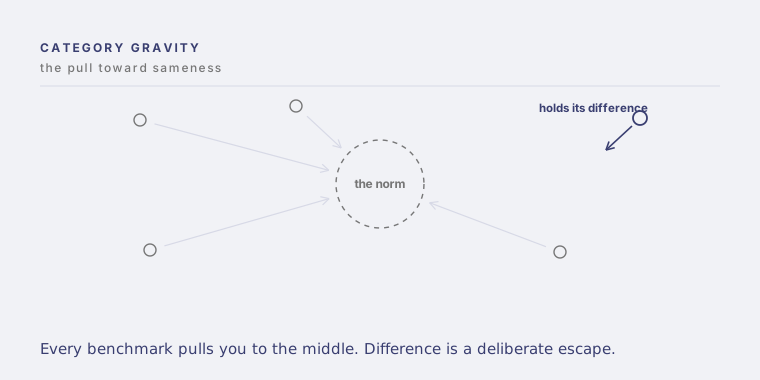
Category gravity emerges because imitation is the safest-looking choice in the room. Customers expect the conventions, investors compare you to the comparables, and every team has studied what the category leader does. Matching the norm rarely gets anyone fired. Breaking it means defending a difference that has no proof yet. So the cautious move and the common move become the same move, and the category quietly sands the edges off everyone inside it.
Leaders underestimate it because each conforming decision is defensible as best practice. The accumulated result is a market of near-interchangeable offerings competing on price, which is the category's way of punishing the sameness it produced.
Why it matters
Differentiation is the first battle, and a company that has surrendered to category gravity has nothing left to win on but efficiency. Efficiency is a race with thin margins and no finish line. Sameness feels safe and is the most dangerous position available, because it makes you replaceable by anyone who does the same thing slightly cheaper. The work is to decide, deliberately, where to obey the category and where to defy it. Meet the conventions that earn trust. Break the ones that would make you indistinguishable. Gravity is never resisted by accident. It is resisted on purpose, in the few places that decide whether you are a choice or a default.